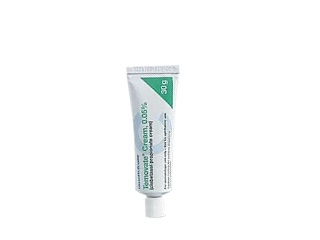
Temovate (Clobetasol) — Patient Guide (Australia)
Temovate contains clobetasol propionate, a very potent corticosteroid medicine used on the skin. It can reduce redness, swelling, itchiness and inflammation in a range of steroid-responsive inflammatory skin conditions.
This guide explains how Temovate works, how it’s typically used, important safety information, and practical tips for safe, effective treatment in Australia.
Quick product information
| Feature | Details |
|---|---|
| Medicine name | Temovate |
| Active ingredient | Clobetasol propionate |
| Medicine type | Topical corticosteroid (anti-inflammatory) |
| Strength | Varies by formulation (commonly 0.05% clobetasol in creams/ointments/solutions) |
| Where it’s used | On affected areas of skin only |
| Potency | Very potent (use carefully and for the shortest effective time) |
| Common directions | Apply a thin layer to the affected area, usually once or twice daily (follow the product instructions) |
Important: Temovate is intended for short-term use in most cases. If you need treatment for longer, your doctor or pharmacist may recommend a different approach or a less potent steroid.
How Temovate works (mechanism of action)
Clobetasol is a corticosteroid. When applied to the skin, it helps control inflammation by:
- Reducing immune activity in the skin, which lowers inflammatory signalling.
- Decreasing swelling and redness by limiting blood flow and inflammatory chemicals locally.
- Relieving itching and discomfort associated with inflammatory skin conditions.
- Slowing abnormal skin changes caused by overactive inflammatory processes.
Because it is very potent, it can work quickly for flares, but it also increases the need for careful use to minimise side effects.
Pharmacokinetics (what happens in the body)
With topical medicines, most of the drug remains in the skin surface. However, small amounts may be absorbed depending on how and where you apply it.
- Absorption: Absorption is generally low when used correctly on intact skin. Absorption can increase if applied to a large area, under occlusion (covered with airtight dressings), on broken skin, on thin skin areas (face/groin), or in children.
- Distribution: Any absorbed clobetasol may enter the bloodstream and be distributed through the body.
- Metabolism: Like other corticosteroids, it is metabolised in the body (primarily in the liver).
- Elimination: Metabolites are mainly cleared by the kidneys.
Clinical implication: Even though systemic absorption is usually limited, prolonged or excessive use can, in rare cases, lead to whole-body corticosteroid effects.
Typical uses in Australia
Temovate is used for skin inflammation that responds to corticosteroids. Common indications include:
- Psoriasis (inflammatory plaques) — only where appropriate and under medical guidance due to risk of worsening certain types
- Eczema/dermatitis including severe inflammatory eczema that has not responded adequately to milder steroids
- Lichen planus (selected cases)
- Other steroid-responsive inflammatory dermatoses as advised by a healthcare professional
Not for: Temovate should not be used to treat fungal or bacterial skin infections on its own unless specifically directed, because steroids can mask symptoms and worsen infections.
When to use it (timing and course length)
Use timing depends on your skin condition and how the medicine is prescribed or recommended. Typical patterns include:
- Start: Apply to the affected area as soon as the flare starts.
- Frequency: Often once or twice daily.
- Duration: For most people, clobetasol is used for short periods and then stepped down to a lower potency steroid or stopped when control is achieved.
- Do not continue “just in case”—continue only as advised.
Practical timing tip: Many people apply Temovate after washing and drying the skin. If twice daily is recommended, consider morning and evening, and apply at roughly the same times each day.
Food interactions
Because Temovate is applied to the skin, food interactions are not generally expected. However, corticosteroids can sometimes affect the body’s metabolism and immune response when systemic absorption is significant (e.g., excessive use, large areas, occlusion). In typical topical use, the likelihood of clinically meaningful food interactions is very low.
If you are unsure—especially if you use large amounts or treat extensive areas—speak with a pharmacist for personalised advice.
Alcohol interactions
There are no well-established direct alcohol interactions with clobetasol used as a topical skin treatment.
Still, be cautious if you are using multiple medicines that affect immunity or if you have conditions where systemic steroid effects would be a concern (rare with correct topical use).
Medicine interactions (and what to watch for)
Topical clobetasol has a low risk of drug interactions because systemic exposure is usually limited. That said, interactions can occur indirectly.
Potential interaction considerations
- Other topical steroids: Do not combine Temovate with another steroid product on the same area unless a clinician instructs you. Using multiple steroids increases steroid exposure and side-effect risk.
- Immune-modifying medicines: If you take medicines that affect immune function, discuss your plan with a healthcare professional—especially if you require larger-area treatment or prolonged use.
- Infection-related concerns: Steroids can mask infection signs. If you apply Temovate to a skin area that is infected (or becomes infected), you may need additional treatment.
When to seek urgent advice
Contact a clinician promptly if you notice:
- worsening redness, swelling, pain
- rapid spread
- pus, honey-coloured crusting, or blistering
- fever or feeling unwell
Dosing and practical application
Always follow the instructions provided with your Temovate product or as advised by your healthcare professional. Below are general guidance principles for topical corticosteroids.
General dosing principles
- Apply a thin layer to the affected skin only.
- Frequency: Commonly once or twice daily.
- Step down: When improvement occurs, you may be advised to reduce frequency, or switch to a milder steroid/emollient.
- Stop when controlled: Avoid continued use once the flare has settled.
How much to apply (finger-tip unit concept)
Many clinicians use a “finger-tip unit” approach to help measure topical steroid amounts. A rough guide:
- One finger-tip unit (the amount squeezed from the tip of a finger to the first crease) typically covers an area about the size of two adult palms (varies by site and technique).
- Use as little as needed to control the symptoms.
If you’re unsure how much to apply, ask your pharmacist to demonstrate measuring and application.
How to apply safely
- Wash your hands before and after application (unless treating your hands).
- Clean and dry the affected area.
- Apply evenly and gently rub in.
- Use moisturisers/emollients as directed—typically you can apply moisturiser before the steroid and wait briefly if advised.
- Avoid getting Temovate in the eyes, mouth, or on sensitive areas unless specifically instructed.
Do not use on certain areas unless told
- Use extra caution on the face, groin, armpits, and skin folds—these are more prone to thinning and steroid side effects.
- Temovate should not be used for acne, rosacea, or around the eyes unless specifically recommended by a clinician.
Safety profile: side effects and risk management
Because clobetasol is very potent, side effects are more likely if it’s used too long, over large areas, under occlusion, or on thin skin areas.
Common local side effects (topical)
- burning, stinging, or mild irritation
- dryness or skin discomfort
- itch may temporarily change during treatment
Less common but important risks
- Skin thinning (atrophy), especially with frequent or prolonged use
- Stretch marks (striae) in treated areas
- Visible blood vessels (telangiectasia)
- Changes in skin colour (lightening or darkening)
- Perioral dermatitis or acne-like rash (especially with use on the face)
- Worsening or unmasking of infection (bacterial/fungal/viral)
Rare systemic effects
In rare cases, especially with heavy use, occlusion, extensive body areas, or children, enough clobetasol can be absorbed for whole-body steroid effects. Possible signs include:
- unusual tiredness or weakness
- increased susceptibility to infections
- signs of hormonal imbalance (rare)
How to reduce risk
- Use the lowest effective strength for the shortest effective duration.
- Avoid occlusive dressings unless instructed by a clinician.
- Do not apply to large areas unless specifically advised.
- Keep treatment confined to the affected skin.
Practical use tips (to make treatment work better)
- Confirm the flare matches an inflammatory condition: If you have uncertain symptoms (e.g., ring-shaped rash, weeping lesions, or sudden worsening), seek advice before using a very potent steroid.
- Moisturise consistently: Emollients can reduce relapse and improve barrier function, often lowering the need for frequent steroid use.
- Use a “step-down” plan: After control, many patients do better moving to a weaker steroid or reducing frequency (guided by clinician/pharmacist advice).
- Track your response: Note improvement within a few days; if there’s little change after about 7–14 days (or sooner if worsening), reassess with a healthcare professional.
- Don’t share your medicine: The right potency and amount depends on the condition and body site.
- Be careful with children: Children’s skin absorbs steroids more easily and they may be more sensitive—always follow professional guidance.
Alternative options (if Temovate isn’t suitable)
There are several alternatives depending on the diagnosis, severity, and body area. Your pharmacist or doctor may recommend one of the following:
- Milder topical corticosteroids: e.g., lower-potency steroids for maintenance or sensitive areas
- Non-steroid anti-inflammatory creams/ointments: may be considered for longer-term management in some conditions
- Emollients and barrier repair: essential support for eczema and dry, inflamed skin
- Phototherapy or systemic medicines: for moderate-to-severe psoriasis/dermatitis when topical treatment alone is insufficient
- Infection-targeted treatments: if the rash is caused or complicated by fungal or bacterial infection
Key point: Alternatives should match the underlying condition. A “stronger” steroid is not always better—sometimes correct diagnosis and the right treatment approach matters more.
Market and legal context for Australia
In Australia, access to topical corticosteroids depends on the product and strength. Temovate (clobetasol) is generally considered a higher-potency corticosteroid. Availability may vary by formulation and packaging, and some products may be restricted to pharmacist supply or require professional assessment depending on current regulatory status.
Online pharmacies should provide accurate product information and may request details to help ensure safe use (for example: age of the patient, affected body site, duration of symptoms, and whether there may be infection).
Regulatory and guidance landscape: Australian healthcare guidance continues to emphasise safe use of corticosteroids, including limiting potency and duration, careful application to sensitive areas, and avoiding use when infection is suspected.
Note: Product labels and Australian prescribing/supply instructions remain the final authority for use.
Recent guidance and best-practice considerations
Across recent years, healthcare advice for topical steroids has consistently focused on:
- Using the correct potency for the specific condition and body site.
- Limiting duration of very potent steroids to the shortest possible time.
- Stepping down treatment once symptoms improve.
- Monitoring for side effects such as skin thinning, especially with prolonged use.
- Recognising infection (steroids can mask it), and treating infection if present.
If you are using Temovate repeatedly for the same issue, it’s worth discussing a longer-term management plan with a healthcare professional to reduce flare frequency and steroid exposure.
Delivery and availability (online pharmacy)
Temovate may be available via online pharmacies in Australia depending on stock, formulation, and current supply requirements. Availability can include different forms such as:
- Cream (often used for less hairy or weeping areas)
- Ointment (often more occlusive; can be suited to dry, thickened patches)
- Solution (commonly used for scalp or hairy areas)
Delivery: Orders are typically processed within business hours and shipped using standard or express services depending on the pharmacy and delivery address.
Packaging and storage: Keep the product in its original packaging. Store as directed on the label (commonly below 25°C), protect from excessive heat, and keep out of reach of children.
If a particular formulation is unavailable, your pharmacist may suggest a suitable equivalent option.
FAQ
1) How fast does Temovate work?
Many people notice symptom improvement within a few days. Full control may take longer depending on the condition and how severe the flare is. If you have not improved within about 7–14 days, or symptoms worsen, seek advice.
2) Can I use Temovate on my face or eyelids?
Use on the face, eyelids, and around the eyes is higher risk and should only be done if specifically recommended. These areas are more prone to side effects such as thinning and irritation.
3) Should I cover the treated area with bandages or plastic?
Unless your healthcare professional instructs otherwise, avoid occlusion (covering with airtight dressings). Occlusion can increase absorption and side-effect risk.
4) What if my rash gets worse after starting Temovate?
Stop and seek medical advice. Worsening may indicate that the condition is not steroid-responsive or that an infection is present.
5) Can I moisturise while using Temovate?
Often yes. Many people apply moisturiser regularly and apply Temovate to the affected patches. If you apply both, you can usually moisturise first and allow it to absorb, then apply Temovate (follow product instructions and pharmacist advice).
6) Is it safe to use Temovate for long periods?
Temovate is intended for short-term use. Prolonged use increases the risk of skin thinning and other side effects. If you have frequent flares, ask about a step-down plan or alternative long-term strategies.
7) Can I stop Temovate once symptoms improve?
In many cases, yes—once control is achieved, treatment is usually reduced or stopped as advised. However, follow your healthcare professional’s plan, especially if you’ve used it repeatedly or for longer than expected.
8) Will using Temovate on one area affect the rest of my body?
For most people using it correctly, systemic effects are unlikely. Risk increases with large-area treatment, occlusion, prolonged use, or treatment in children.
9) Can Temovate be used with other creams?
Generally, you can use moisturisers alongside it. Avoid layering multiple corticosteroid products on the same area unless instructed. If you’re using other topical medicines, ask your pharmacist how to separate application timing.
10) What should I do if I accidentally apply too much?
Apply only a thin layer next time and avoid occlusion. If you’ve used it excessively on large areas, on sensitive skin, or for longer than recommended, contact a pharmacist or clinician for advice.
When to seek medical advice
Get professional advice if you:
- develop signs of infection (spreading redness, pus, worsening pain)
- need treatment beyond a short course
- repeatedly require very potent steroid courses
- are treating children or using it on sensitive areas
- have unclear diagnosis and symptoms do not improve
Summary: Temovate (clobetasol) is a very potent topical corticosteroid designed to reduce inflammation in steroid-responsive skin conditions. When used correctly—thin layer, affected areas only, and for the shortest effective time—it can relieve symptoms effectively. Because of its potency, follow guidance carefully to minimise side effects and reduce the risk of complications.